Contact ↗
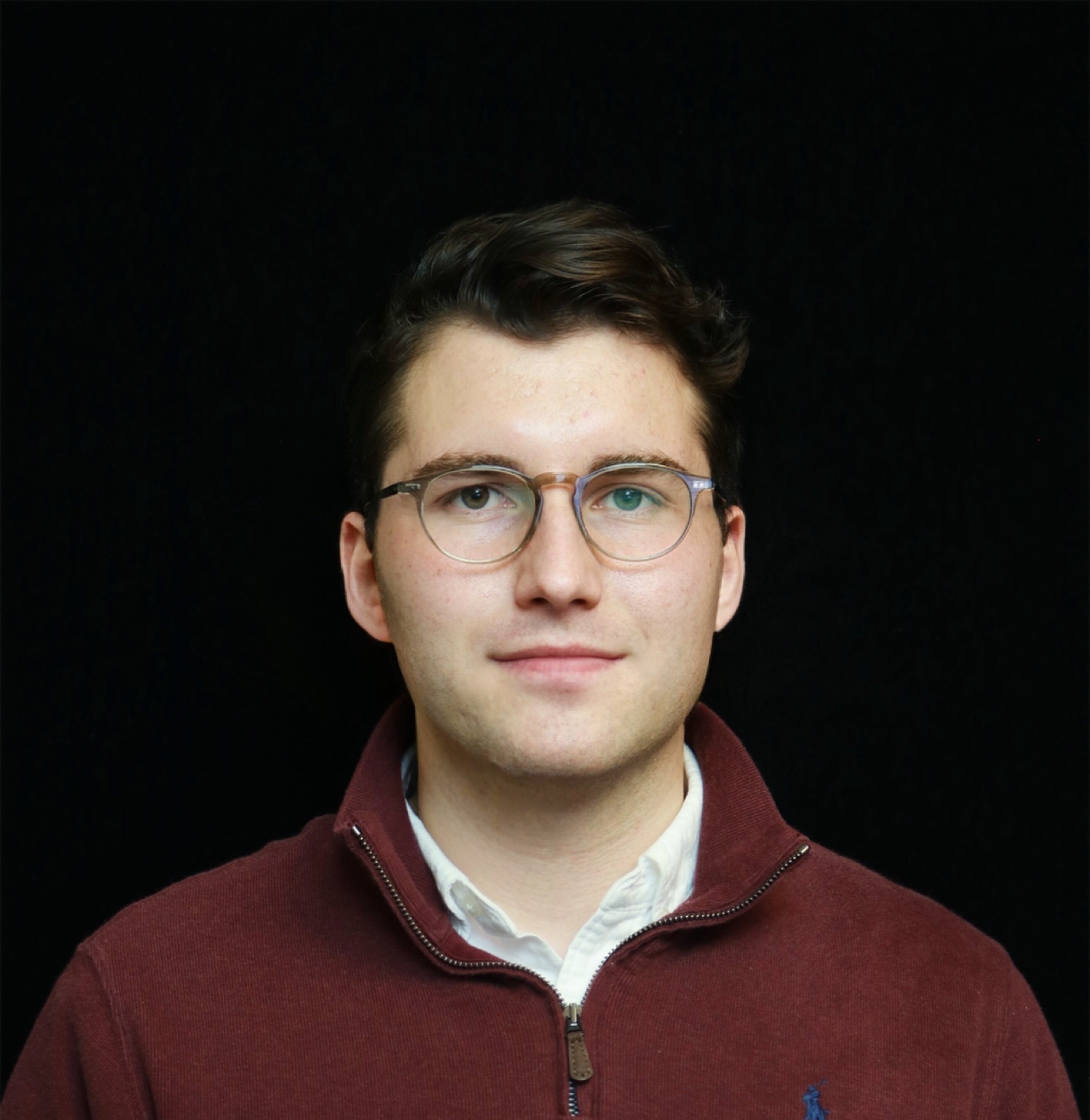
Togan Timakhoff / Engineering & research Toronto
ML Compiler Engineer · AWS Annapurna Labs

Togan
Timakhoff.

I develop compilers and kernels for LLM inference at AWS. My research background spans quantum control, superconducting device simulation, and quantum machine learning.

Togan Timakhoff
TORONTO, ON, CANADAENGINEERING & RESEARCH
ML systems engineering
Quantum computing research
Background ↓SELECTED WORK & RESEARCH
VOL. 01 / 2026
Currently atAWS Annapurna Labs
ML compilers / Kernels / LLM inference
↗
01 / Selected work

Engineering & research.

Compiler and kernel engineering,
quantum control, and scientific computing.

01 / AWS Annapurna Labs

Compilers, kernels &
inference performance.

I develop compilers and kernels for LLM inference at AWS Annapurna Labs, with a focus on performance and reliable execution.

My role combines software engineering, performance analysis, and collaboration across engineering teams.

ML compilers · Kernels · LLM inference
02 / GRADUATE RESEARCH

Learning-based
quantum control.

I developed reinforcement-learning training and evaluation software for quantum control-pulse optimization using Python, JAX, and PyTorch.

My work included simulation environments, reward computation, simulator feedback, and experimental device data. I evaluated behavior under noise and frequency drift.

JAX · PyTorch · Quantum control
Related coauthored conference abstracts · 2025GKP stabilization ↗On-chip bosonic QEC ↗
03 / Nanoacademic Technologies

Superconducting
device modeling.

I built a Python workflow connecting QTCAD simulations, circuit-parameter extraction, and Hamiltonian generation for superconducting hardware.

I profiled computational bottlenecks and checked selected outputs against analytical references.

QTCAD · Hamiltonian modeling · Scientific software
04 / CERN

Generative models
for particle physics.

I contributed to a CERN openlab study of GANs for two b-jet distributions in simulated Higgs signal events, using a modified DijetGAN architecture.

Our report describes classical training with PyTorch and TensorFlow, comparisons with Monte Carlo distributions, and exploratory continuous-variable quantum GANs using PennyLane and Strawberry Fields.

Coauthored CERN openlab report · 2021 ↗
Engineering experience and collaborative quantum research.Research profile ↗
02 / Background

Experience & approach.

My research and engineering work draws on simulation, numerical validation and performance analysis. I’ve built optimization tools, checked selected numerical outputs against analytical references, and profiled computational bottlenecks.

ExperienceSelected roles
2025 — NOWAWS Annapurna LabsML Compilers & Kernels

Software Development Engineer, Toronto. Building high-performance machine learning systems with a focus on inference, compilers, and kernels. Since November 2025.

2024NanoacademicResearch Intern

Multiscale simulation of superconducting quantum devices. Montréal, February–June 2024.

2021CERNResearch Intern

Generative adversarial networks for Higgs boson ttH process simulation. Geneva, June–October 2021.

03 / Quantum error correctionAn interactive field guide

Building resilient information
from fragile qubits.

A guided comparison of encodings, error syndromes, and recovery.

Explore eight teaching models: encode, add an error, measure, then inspect recovery.

Explore eight code examples: repetition, Steane, Shor, surface, bivariate bicycle (qLDPC), a small hypergraph product, four-component cat, and square-lattice GKP. Repetition includes bit-flip and phase-flip encodings with 3, 5, 7, or 9 qubits. The interactive models need JavaScript.

For a CSS code, the X-error syndrome is sZ = HZeX mod 2. Ideal square GKP corrects small displacements |Δq|, |Δp| < √π / 2 when [q,p] = i.

Read the model conventions and references ↗